
Quick answer:
Gutters, fascias, and soffits form your home’s roofline defence system — directing rainwater away from the structure and protecting rafters from moisture. In Chesham, where annual rainfall averages 734mm, keeping them in good condition isn’t optional. This guide covers materials, warning signs, maintenance, and when to call a professional.
Gutters aren’t glamorous. Nobody pins a picture of a nicely aligned downpipe on their mood board. But here’s the thing — a failed roofline causes damp walls, rotting timber, crumbling brickwork, and potentially a very uncomfortable conversation with your insurance company. So while we understand if you’ve never given yours a second thought, this guide to guttering, fascias & soffits is worth a few minutes of your time.
We’re Kingsway Roofing & Building, and we’ve been fixing, fitting, and inspecting rooflines across Chesham and Buckinghamshire for years. Here’s everything we think homeowners should know.
What does the guttering system, fascias and soffits actually do?
Think of your roofline as a three-part team.
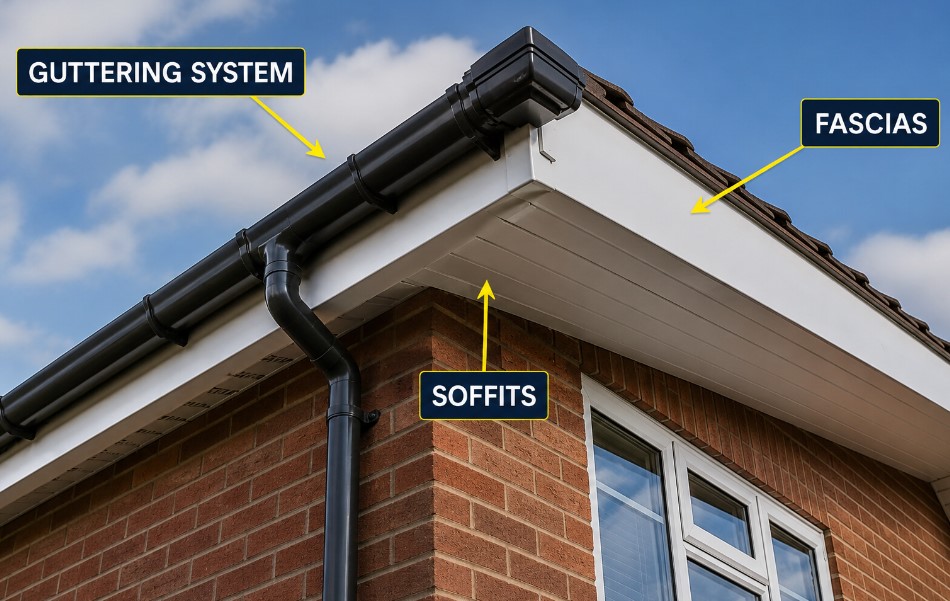
Gutters collect rainwater running off the roof and channel it into downpipes, which direct it safely away from the building. Without them, water would cascade down your walls, saturate the soil around your foundations, and find its way inside.
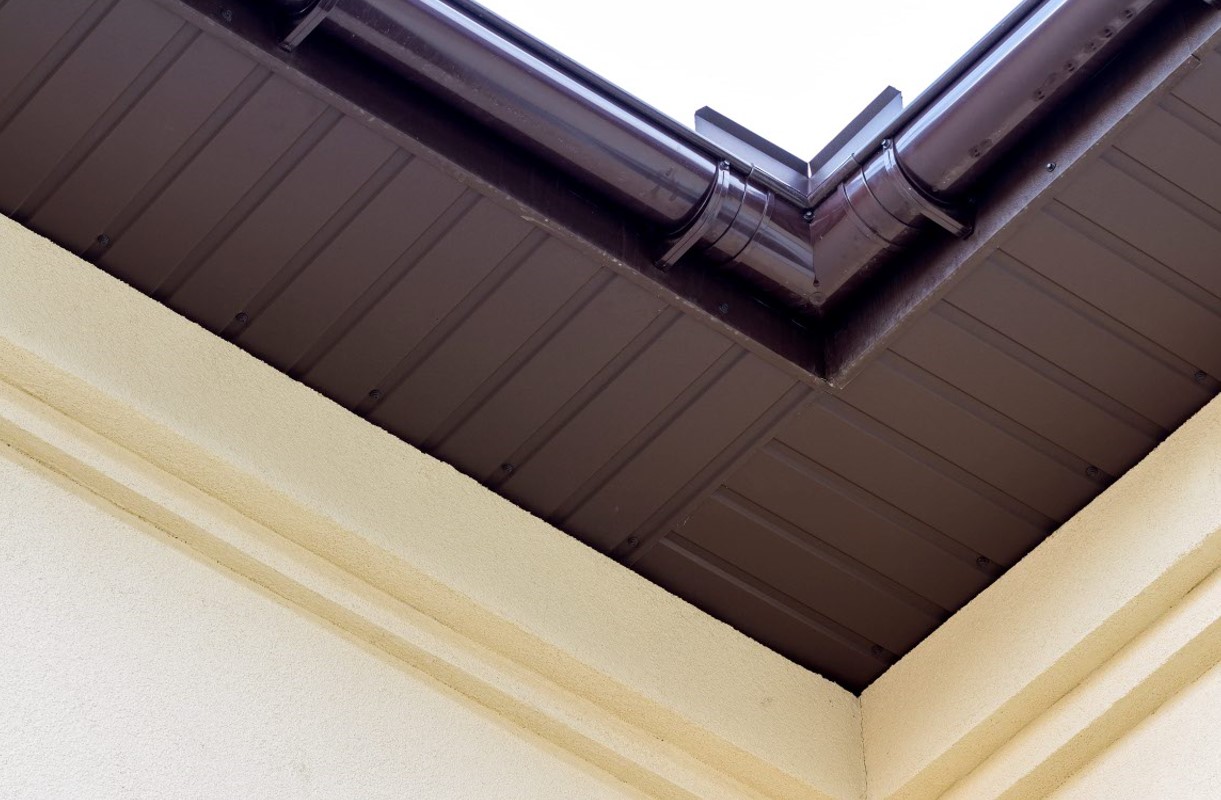
Fascia boards run along the roof edge, supporting the bottom row of roof tiles and holding the guttering in place. They’re structural as much as they’re aesthetic.
Soffits sit beneath the fascia, closing the gap between the roof edge and the outer wall. They protect your rafters from weather exposure and — crucially — allow ventilation into the roof space. Ignore a damaged soffit for long enough and you’re looking at condensation, mould, and timber decay.
When one part of this system fails, it tends to drag the others down with it.
Guttering in Chesham: why local weather makes maintenance non-negotiable
Chesham averages around 734mm of rainfall per year (according to weather-and-climate.com). That’s a significant volume of water hitting your roof year-round — and that’s before you factor in the autumn leaf drop that blocks downpipes within days, or the moss and algae that creep into older guttering over time. In periods of heavy rain, poor gutter sizing can quickly lead to overflow and water damage.
Many properties across Chesham and the surrounding Buckinghamshire villages are older builds — Victorian terraces, Edwardian semis, post-war estates — all with rooflines that may not have been properly updated in decades. Extensions and conservatories add complexity, too, creating additional drainage runs and potential weak points, so each run in the guttering system should be sized to the roof area and slope it serves.
The upshot? If you haven’t had your guttering Chesham property surveyed recently, it’s probably overdue.
Common materials and what suits your home
Guttering: uPVC, aluminium or cast iron?
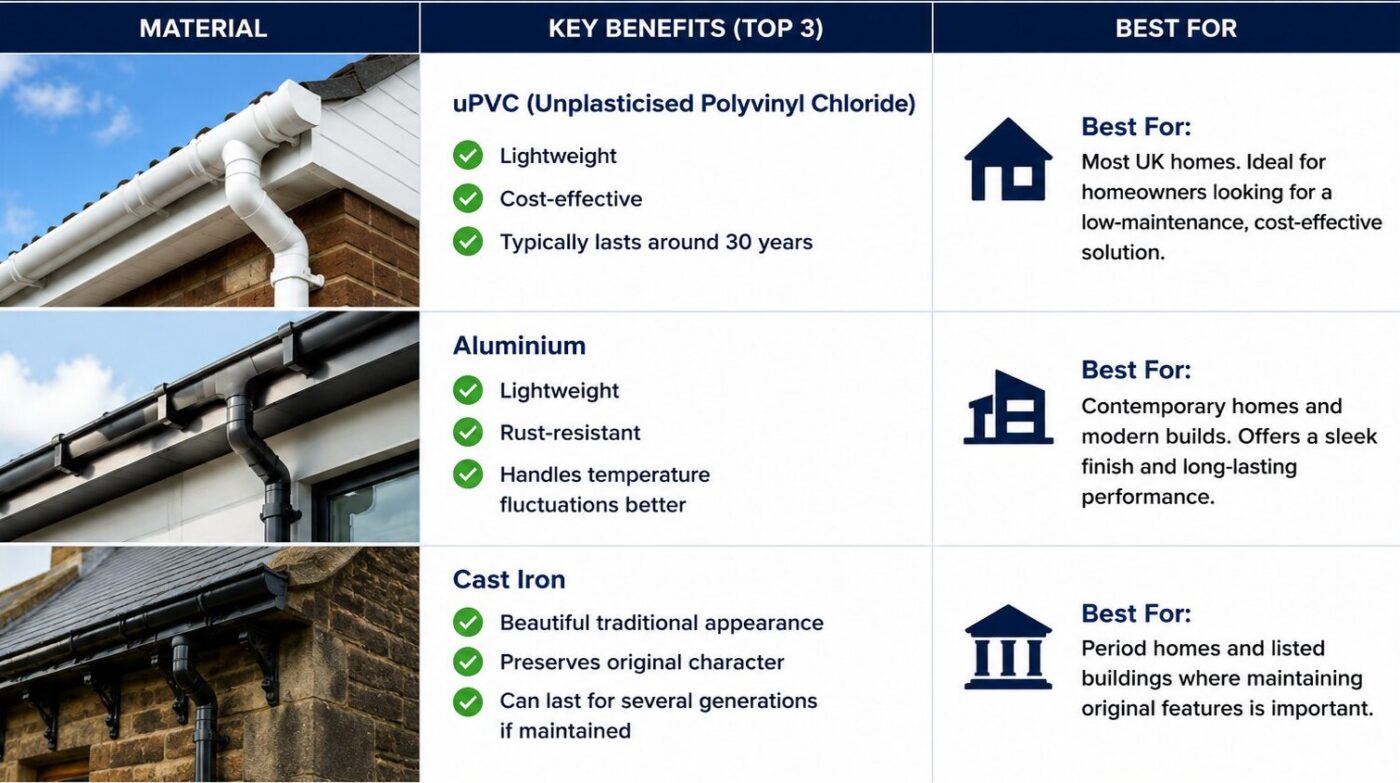
uPVC is the most popular choice for UK homes, and for good reason. It’s lightweight, rot-resistant, cost-effective, and needs very little upkeep. We fit uPVC guttering as standard because it holds up well against Britain’s variable climate — no rusting, no repainting, no fuss. With proper care, PVC guttering typically lasts around 30 years, which also helps keep the overall cost down over time.
Aluminium is the most popular choice for residential gutters after uPVC because it’s lightweight and rust-resistant, and it suits more contemporary builds. It costs more but lasts longer and handles temperature fluctuations better. Copper is another (though rarely used) metal option and can last over 50 years with minimal maintenance.
Cast iron is common on older houses and listed properties where original character needs preserving, and a listed building may require matching heritage-appropriate materials. It looks beautiful but requires regular painting and is prone to rust if neglected. If maintained properly, it can last for several generations. We can also advise when metal guttering is worth considering for period properties — but if you’re replacing an old cast iron run just because it’s failing, uPVC is almost always the smarter call.
Fascias and soffits: uPVC vs timber
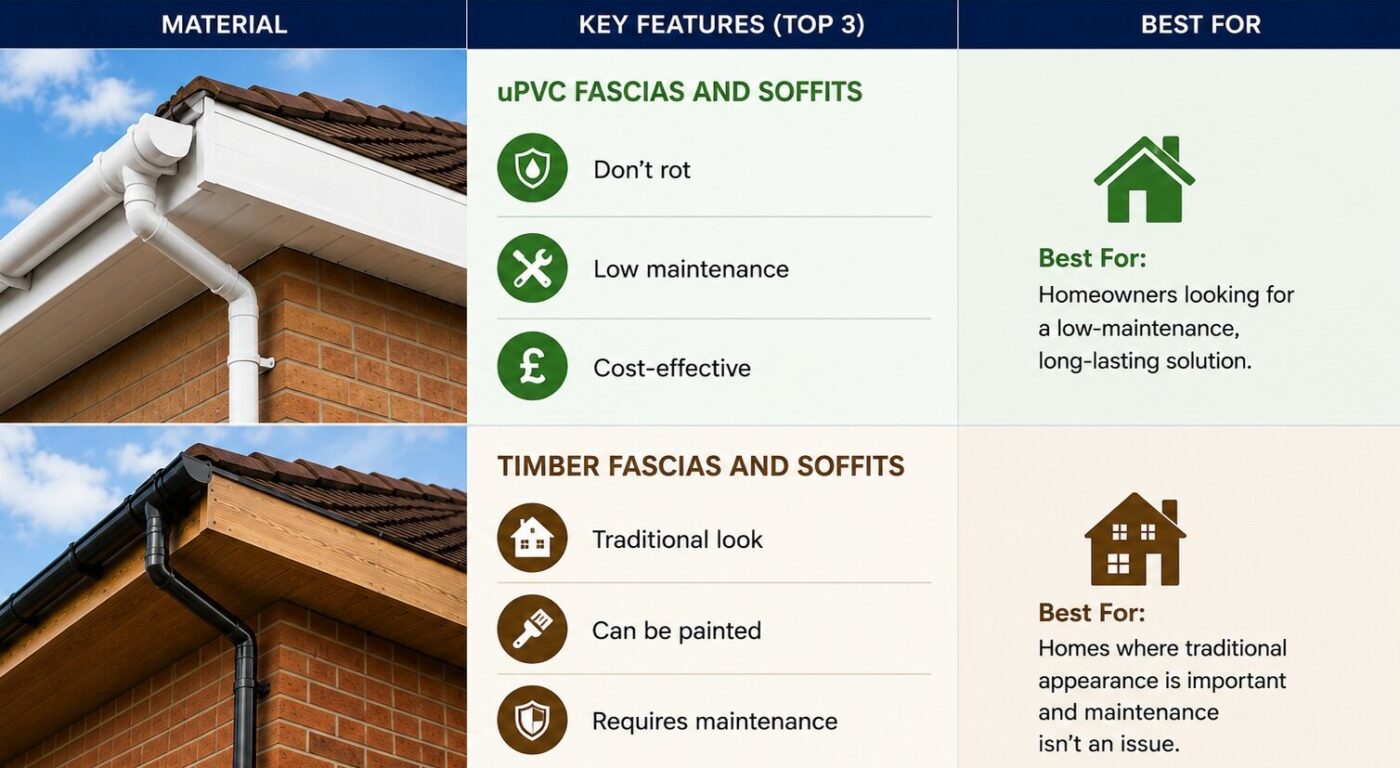
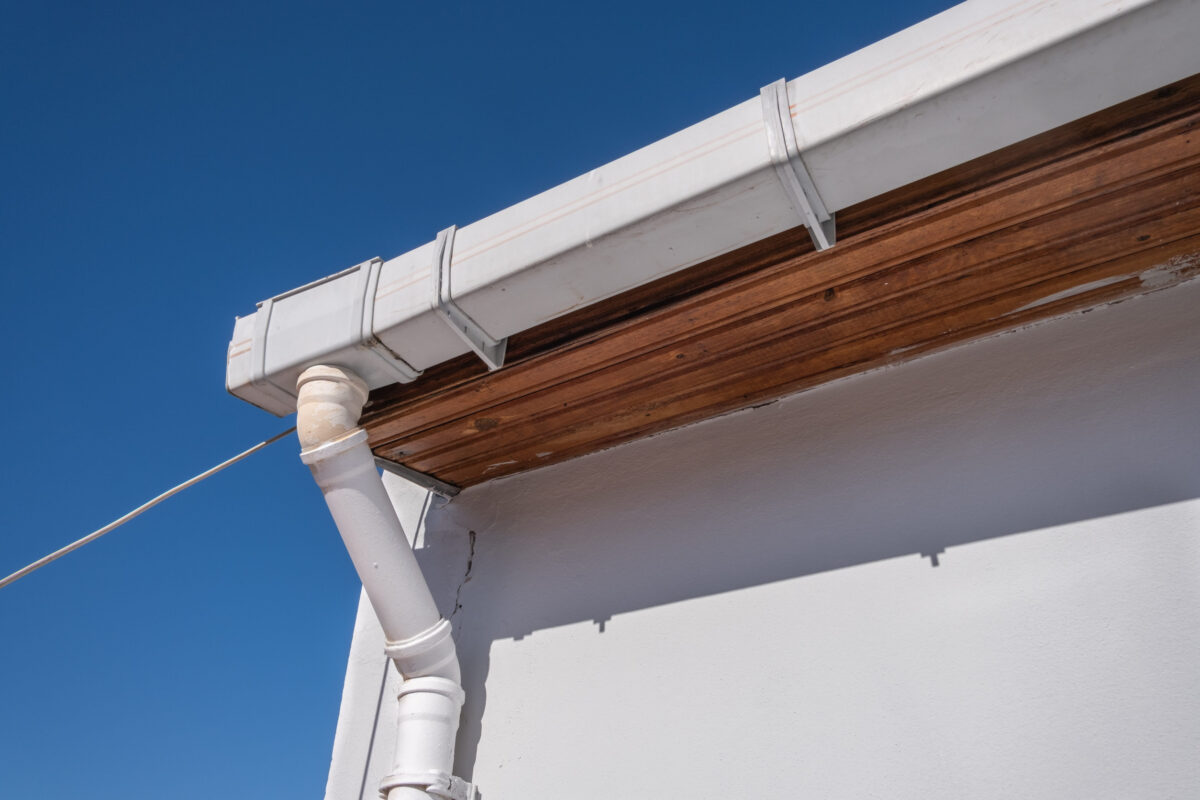
Timber fascias and soffits are traditional and can be painted to match your home’s exterior. The catch? They need regular maintenance. Once moisture gets in, rot follows quickly — and that can spread to the roof structure behind it.
uPVC fascias and soffits don’t rot, don’t need painting, and shrug off the weather without complaint. PVC gutters are inexpensive, lightweight, and easy to install, which helps keep them practical alongside uPVC roofline products. We offer fascia boards in a range of styles — plain, square-edged, ogee, round-nose — and multiple thicknesses to suit different applications. For fascia soffit installation in Buckinghamshire, uPVC is what most of our customers end up choosing once they hear how little upkeep it requires, while metal guttering usually pushes up the overall cost by comparison.
Signs your guttering, fascias or soffits need attention
Here’s what to look out for:
- Gutters overflowing during rainfall, or water pouring over the front lip
- Visible staining or green algae streaks on your external walls
- Sagging gutter runs or loose, missing brackets
- Leaking joints — you’ll often hear these before you see them; poorly formed overlaps can cause leaks, and gutter sections typically need about a 3-inch overlap
- Fascia boards that look soft, swollen, or are starting to peel
- Birds nesting in or around the roofline (they love a gap in a damaged soffit)
- Damp patches, musty smells, or mould appearing inside upstairs rooms
- Drips near doorways, patios, or along the base of the wall
If any of these ring a bell, don’t wait. Small roofline problems have a habit of becoming expensive ones.
Clean, repair, or replace? A simple homeowner guide to soffit repairs
Not every problem calls for a full replacement — but knowing which option makes sense saves both time and money.
Clean if the issue is straightforward blockage — leaf build-up, debris in a downpipe, a bit of moss around the joints. A good clean-out twice a year usually handles this and helps protect the property’s guttering.
Repair if you’ve got a single leaking joint, a cracked section, or a bracket that’s come loose. Isolated damage in an existing system is often fixable without replacing the whole run.
Replace if your guttering is perished, repeatedly causing problems, or if the fascia boards behind them are rotting. Replacing sagging uPVC that keeps failing can still make sense before the end of its life, even though PVC guttering often lasts around 30 years before replacement; the same goes for tired timber fascias.
Worth noting: soffit and fascia replacement on a semi-detached home typically takes around 2–3 days — it’s not the disruption most homeowners expect.
If you’re not sure which route to take, we’re happy to come out, take a look, and give you an honest assessment. No upselling, no pressure.
What a professional roofline inspection looks like
When we visit a property, here’s what we’re checking:
- Whether gutters are properly aligned with the correct fall towards downpipes, usually around 20mm for every 5m of guttering
- Joint integrity and bracket spacing across the full run
- Where downpipes discharge — and whether that’s causing pooling; downspouts are also typically spaced at about every 30 feet to maintain proper drainage
- The condition of fascia fixing points (if the board’s rotten behind the gutter, we’ll find it)
- Soffit ventilation — whether airflow into the roof space is adequate or blocked
- Any evidence of water tracking behind the guttering onto the wall
Gutters should also slope slightly toward the downpipe, with trade guidance often given as about 1 inch for every 10 to 20 feet.
We’re fully insured, we tidy up behind ourselves, and all our work is guaranteed. We also won’t leave you guessing — if we find something unexpected behind the boards, we’ll show you before we do anything about it. As part of that inspection, we also check the drainage system has enough downpipe provision, typically one downpipe for every 6–12 metres of gutter, and whether rainwater disposal complies with building regulations, while making sure all fasteners and brackets are secure to help prevent water damage. That compliance helps reduce the risk of rainwater damage to the building.
A simple seasonal maintenance checklist
Spring — Clear any remaining winter debris, check all joints are sealed, look for frost damage to brackets.
Autumn — Clear leaves before they compact and block downpipes, run a hose from the roof end to test flow, check for sagging.
After storms — Quick visual check for any sections that have shifted, lifted, or started dripping.
One important note: if accessing gutters requires a ladder, please think twice before going up yourself. Falls from height are one of the most common causes of serious injury in domestic DIY. We offer gutter cleaning as part of our service — no callout charge, and it’s one of those jobs that’s much safer left to people who do it regularly.
Why homeowners choose us for roofline work
We’ve been doing this long enough to know that most homeowners just want someone honest who’ll turn up when they say they will, do a good job, and leave the place tidy. That’s genuinely what we aim for every time.
We cover Chesham, Buckinghamshire, North London, and the surrounding areas. We offer free, no-obligation estimates, and we’ll beat any genuine like-for-like quote. Our work is fully insured and comes with a guarantee — so if something isn’t right, we’ll sort it.
FAQs
How often should a property’s guttering be cleaned in Chesham?
At least twice a year — once in late autumn after the leaves have fallen, and once in spring. If you have overhanging trees nearby, more often.
Is uPVC guttering better than cast iron for older properties?
It depends on the property. uPVC is cheaper, lighter, and maintenance-free, while box gutters are often used on commercial property because they can handle large volumes of water. Cast iron suits heritage and listed buildings where character matters. Half-round gutters are also commonly suitable for roofs with a pitch of around 40–50 degrees. We can advise based on your specific home. Any changes on a listed building may also need consent, so check local requirements.
Can leaking gutters cause damp inside the house?
Yes. Water that’s not properly channelled can soak into brickwork and eventually cause internal damp — especially in older properties with solid walls.
What’s the difference between a fascia and a soffit?
The fascia is the vertical board running along the roof edge; the soffit is the horizontal board beneath it, closing the gap between the roof and the wall.
Do I need vented soffits?
Most modern installations use vented soffits to allow airflow into the roof space. Without adequate ventilation, condensation builds up and can cause mould and timber decay.
How long does fascia and soffit replacement take?
According to the FMB (2026), a terraced house typically takes 1–2 days, a semi-detached 2–3 days, and a detached property 3–5 days.
Can you replace fascias and soffits without changing the gutters?
In most cases, gutters need to come down to access the fascia properly. It’s also an ideal opportunity to replace old guttering at the same time.
Do you cover areas outside Chesham?
Yes — we cover Buckinghamshire, North London, and surrounding areas. Get in touch and we’ll confirm your location.
Do you offer free quotes for guttering in Chesham?
Absolutely. All our estimates are free and come with no obligation whatsoever.
Get a free, no-obligation estimate
If you’ve spotted a problem — or just want peace of mind before winter arrives — we’d love to help. We cover Chesham and the wider Buckinghamshire area, and there’s no callout charge for coming out to take a look.
Simply give us a call, drop us an email or fill out our contact form to get started.
